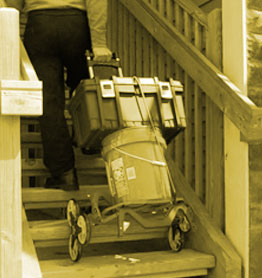
The UpCart is the answer to all your travel needs. And not only the travel needs but also your daily routine house chores whether its lifting some heavy stuff upstairs, or bringing the groceries home after shopping or any other task to lift anything upstairs.
Did you know about the construction of a Doomsday Seed Vault in the Arctic and the science behind it?
A journey to the end of the earth will show you a place that might someday save humankind. It’s a bank built to last 10,000 years. It’s not money or gold but the world’s most important assets which are being preserved and made safe from climate change and nuclear war, locked deep inside the doomsday vault.
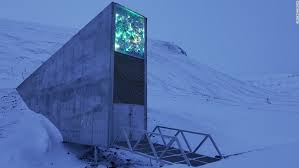
High on a wind-blasted Arctic mountain, a stark concrete doorway leads to the Svalbard Global Seed Vault, a store to ensure the survival of the world’s most precious plants among the last bits of land before the North Pole.
What happens if war or global warming threaten the key plants that the world depends on for food? A consortium of scientists is running what it believes is an answer: a deep-freeze for thousands of seed samples that is meant to serve as a back-up to cope with the worst-case scenarios.
Designed to cope with the most pessimistic nightmare of a doomsday the Global Seed Vault is buried inside a mountain on the freezing Arctic islands of ice-covered Svalbard. Way up north, in the permafrost, 800 miles or 1300 kilometers beyond the Arctic Circle (The North Pole), is the world’s largest secure seed storage, opened by the Norwegian Government in February 2008. From all across the globe, crates of seeds are sent here for safe and secure long-term storage in cold and dry rock vaults.
The very first barrier to entry is the sheer remoteness of the location. Next comes an unintended hazard – a sheet of rock-hard ice cover. Each step is perilous with the blow of piercing wind and an extreme quiet atmosphere. The vault is secured by four sets of locked doors, according to the Crop Trust.
Another door opens on to a tunnel that gently descends deeper into the mountain. Most of the tunnel is lined with concrete but further inside the rock face is bare. Voices start to echo.
The concept of the project is simple: imagine everything that could go wrong with the world’s key food crops and make sure samples of them are untouched here.
The temperature is minus 4F and in the permafrost where the ground never thaws. So the entrance itself is 130m above the sea comfortably above the most horrific projections for how the oceans could rise if there is a total melting of the polar ice-caps in the coming centuries.
Thick rock offers the best insurance against missiles. Crystals of ice are glinting on the rock walls. One more door lies ahead. It is thickly encrusted in ice. The air beyond is kept at minus 18C.
The store has rows of shelves, each one crammed with large plastic containers of the sort you might use to keep files or move house. Inside are tiny silver packets that hold the seeds themselves – more than 865,871 packets in all, representing more than 5,000 species and nearly half of the world’s most important food crops and is capable of holding many more.
The labels are fascinating – there are seeds from Africa, Asia and America. There are also boxes from North Korea – that’s a big surprise.
Down on the water is the northernmost town in the world, Longyearbyen, with about 2,000 people. But polar bears outnumber the people, and reindeer outnumber everything. It’s an otherworldly place, a twilight zone, where, sometimes, the sun never rises and the moon never sets. In the dead of winter, it was the last stop in the 30-year journey of American scientist Cary Fowler.
Cary Fowler runs the Global Crop Diversity Trust set up by the United Nations and a group called Bioversity International. His safe house cost $9 million. Norway paid for construction, Bill Gates paid for the shipping, and seeds from nearly every nation on earth are locked inside.
From the outside, the vault looks like a concrete wedge pounded into a mountain. But as you walk through the door, you cross from a hostile wasteland into a safe house for humanity. It looks like a “Doomsday vault”.
Fowler says. “We built it to last as long as we could imagine. I don’t know what was in the minds of the people who built the pyramids. Maybe they were building to last forever too. But I can’t think of anything that’s built in our lifetime that’s been built with this kind of time horizon.”
Inside, pipes provide additional refrigeration, despite the fact the vault is only several hundred miles from the North Pole. “We’re going freeze it even further,” Fowler explains.
They freeze it colder than the permafrost, so that if the earth warms and the power goes out, the vault will stay frozen for another 25 years.
The treasures that the vault was built to house came by plane and approached an airstrip at the base of the mountain nearby. What’s in the boxes took 10,000 years to develop and 70 years to collect.
“This is the coldest place in the mountain. We wanted to take advantage of the naturally frozen temperatures down here. We wanted absolutely the coldest spot we could find,” Fowler explains. There are air locked doors and they keep the cold air in.
Inside the boxes that came off the plane are millions of silver envelopes, containing seeds of almost everything.
Here’s the detailed coverage of the doomsday Seeds Vault by 60 Minutes:
The”Svalbard Global Seed Vault” is built to warehouse backup copies of all the world’s crops – 1.5 billion seeds – including everything from California sunflowers to ancient Chinese rice. If an asteroid strikes the earth, seeds to restart agriculture would come from the vault. But science fiction aside, the main purpose is to protect against a doomsday that is unfolding right now because the plants we’ve been eating for 10,000 years are going extinct.
“If you ask somebody ‘How many kinds of apples are there?’ They’re going to say ‘Well, there’s red, there’s green. There’s yellow. There’s Macintosh. There’s Golden Delicious.’ They’re going to give you an answer like that,” Fowler says.
“But in fact, in the 1800s in the United States people were growing 7,100 named varieties of apples. 7,100 different varieties of apples that are catalogued,” Fowler explains.
“Today we’ve lost about 6,800 of those, so the extinction rate for apples varieties in the United States is about 86 percent,” he explains.
Extinction exists in all crops. Estimates are that every day one crop strain disappears. And here’s why: seeds used to be passed down through families. But today, farmers are planting mass-produced industrial seeds. The upside is more food. The downside is the family variety goes extinct.
Almost every country collects it’s own seeds in banks for safe keeping. And for 110 years, the U.S. Department of Agriculture has sent scientists, called “plant explorers,” to the ends of the earth to collect seeds.
Just by looking at the material in a farmer’s field you might say, ‘That one’s no good. Don’t collect it.” But you can’t anticipate what value that might have. There may be genes in that material that are gonna be of immense value in the future. Today, scientists prevent famines by going through tens of thousand of plants looking for genes to fight disease or drought or any other problem.
There was an important seed bank in Afghanistan which has been destroyed. The Afghan seeds were thrown away because looters wanted the glass jars they were kept in. Much of Iraq’s seed collection was lost in that war and, in the Philippines, a typhoon washed away much of the world’s most important rice bank.
“Doomsday doesn’t have to come in the form of an asteroid. Doomsday can come in the form of an equipment failure or mismanagement just human mismanagement or a lack of funding or a typhoon, or something like that. And those kinds of things are happening all the time,” Fowler says.
Once that crop is lost, Fowler says we’ll never see it again. “And any kind of characteristic that it might have had is gone. It’s off the artist’s palate. It’s the color that we can’t use anymore. It may have the disease or pest resistance that we absolutely need to have a viable crop in the future. Gone.”
Svalbard may seem a strange place to build an ark for plants. The islands are a white desert, barren and chilled to 30 below zero. The sun never comes up over the horizon in the wintertime. It’s ironic that the world’s agricultural heritage is being stored in a place with no agriculture at all.
But the mountains are just the place to save the resources of life itself-remote from nuclear war, from storms, and rising seas.
Around six months earlier some of the Syrian seeds – including ancient and potentially sturdy varieties of wheat, barley and chickpeas – were extracted from the deep-frozen shelves because they were needed back in the Middle East. The withdrawal actually serves as proof that such a vault is necessary.
In all, 128 boxes – out of a total of 350 originally sent from Aleppo – were carried back through all the doors, up the tunnel and over the dangerous ice-patch to be flown to Lebanon and Morocco.
Whether it’s a dry climate, a new virus, or infestation, the genes to stop a famine may be in one of the boxes stored in the vault. When the last of the seeds descends the tunnel, the lights will go out, the vault will be locked, and Cary Fowler will have achieved his life’s work-preserving civilization’s past against an uncertain future.
“So, if worst comes to worst this does save the world,” he says. “But it also has a more mundane feature which is that it helps us everyday by feeding people.”
That’s exactly what this place was designed for. Most countries have their own stores of key plant varieties and the Global Seed Vault is meant to work as a back-up to those back-ups.
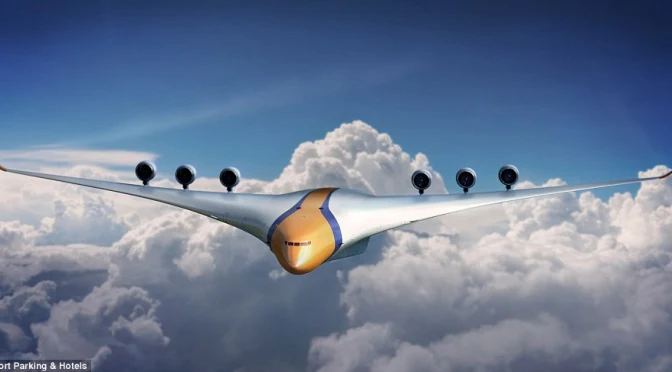
The team from Airport Parking & Hotels and Imperial College London has brainchild and predicted a huge curved future concept aircraft which could realistically look like around 30 to 40 years from now.
This marvelous projected aircraft could be the way people travel to far-flung destinations in the year 2050.
With a comprehensive design inside and out, this incredible futuristic plane features tremendous 1,000 cabin seats, virtual reality headsets, live image projections on the walls instead of windows and spacious lounges intended to improve the passenger experience.
Airport Parking & Hotels and Imperial College London partnered to predict what the future of flight could realistically look like in 40 years.
A team, including aircraft design students, came up with a futuristic concept with cutting-edge technology (pictured: premium cabin).
A wider aircraft creates more cabin space, and the designers filled some of it with in-flight bars that allow passengers to socialize.
The design team from London said there would be a seating capacity for 1,000 passengers on the blended wing aircraft.
With a complete rethink, the team, including aircraft design PhD student Adam Omar, designed an advanced plane that bears some of the hallmarks of today’s jets and next-generation technology.
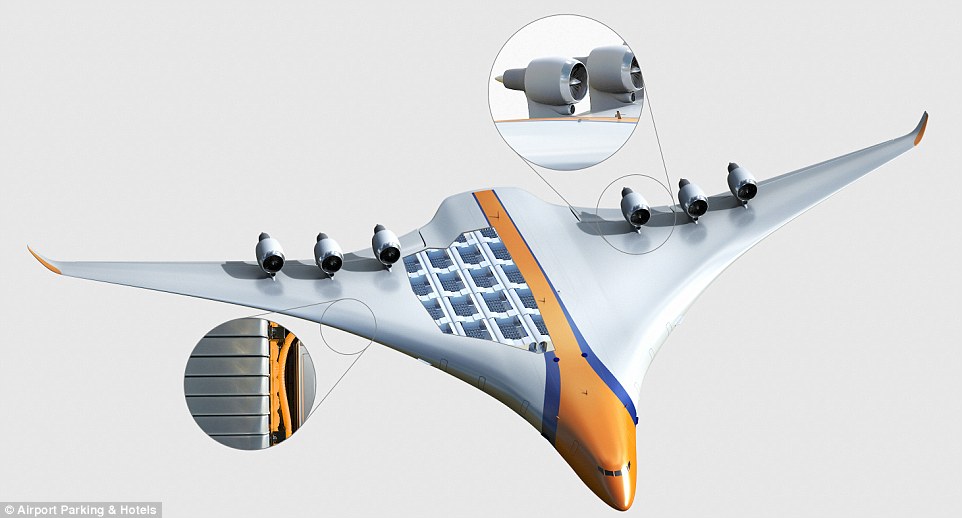
Thanks to its blended wing design, its fuselage would be wider and shorter and it wouldn’t have a tail wing, and it would be propelled by six bio-fuel engines at the back of the body.
The designers say the aircraft would have more legroom than today’s planes despite having so many people on board because of its widened body and large wings.
Of the notable changes, the concept plane has very few windows, which could make air-travel uneasy for some.
Backseat monitors would be replaced with wraparound virtual reality headsets built into the seats with wraparound visors that display 3D films and programs. The visors are designed to automatically fold away on takeoff and landing or in the event of an emergency.
In addition to improving passenger experience, the team aimed to design a plane that is fuel efficient and less harmful to the environment eliminating the reliance on fossil fuels.
The concept plane would run on low-emission bio-fuels and be propelled by clusters of electric fans powered by small engines.
Instead, transparent LCD screens on the walls display the view outside or films, programs or maps from the in-flight entertainment system, or relaxing scenes to help passengers fall asleep.
In-flight bars would allow passengers to get out of their seats and socialize more freely with other travelers.
The traditional airport design would have to be overhauled in order to accommodate the planes and allow passengers to board.
Designers said large portions of the seating, flooring and walls could be made from ultra-light metal micro-lattice developed by Boeing.
For their high-capacity aircraft, the designers took cues from futuristic concepts previously produced by Airbus, Boeing and NASA.
With electric fans powered by small engines, the plane would produce just a tiny fraction of the emissions from current aircrafts and reduce drag.
The plane would have very few windows, so transparent LCD screens would be installed on the interior walls to display outside scenes.
Beverley Barden, head of marketing at Airport Parking & Hotels, said: ‘Air travel has long been considered an uncomfortable way to begin a holiday.
‘With these advances in passenger space, in-flight-entertainment, and extra room for bars and relaxation areas, it will be a great revolution in the aviation industry.
It happens several times that we keep our smartphones at places and forget or we lost somewhere while dropping it off or somebody has stolen it. In any such circumstances this information is of vital use.
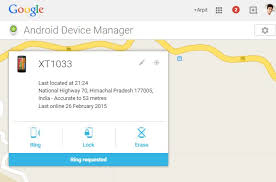
Here is how you can search and locate your smartphone and secure it back. Google’s Android Device Manager locates lost devices and helps you keep your device—and the data inside it—safe and secure.
Step 1:Log in to your Google account from any other device, the same account which you have logged in with your android device.
Step 2: On the google search bar write “Where is my phone?” and you will locate it on google map, but before showing your smartphone’s location google will ask you to reenter the password in order to ensure the authorized access and secure your device.
Step 3: You have three options there: Ring, Lock and Erase.
In case you forget your phone in some known location, you can ring and find it out.
In case you dropped it somewhere you can lock your phone.
In case your smartphone is stolen you also have an option for erasing all the data from your phone in order to secure your confidential information from being theft.
Not only this Google’s Android Device Manager will ring even if the phone is in silent mode and you cannot locate it.
We expect further such innovative steps from giant companies like google and alike.
Please circulate this message as far and to as many people as you can.
This is the season of fruits like mango, jamun, jack fruit Etc.
My request to all of us is to kindly don’t throw the seeds, wash them, dry them and keep it in a plastic pouch in your car.
Whenever you go out and find baren land while travelling, on a highway throw these seeds. They will germinate easily the coming monsoon.
If with this act we can contribute even a single tree to our mother nature, our mission is successful.
This is not just a random idea. It was initiated decades ago in areas like satara and ratnagiri in maharastra and have been successful. Many other districts have appealed to people to spread abundance in nature this way and many citizens have joined this wonderful mission.
It would be wonderful if all of us join this great mission and contribute a little towards our mother nature and make this world a better place to live in for our next generations.
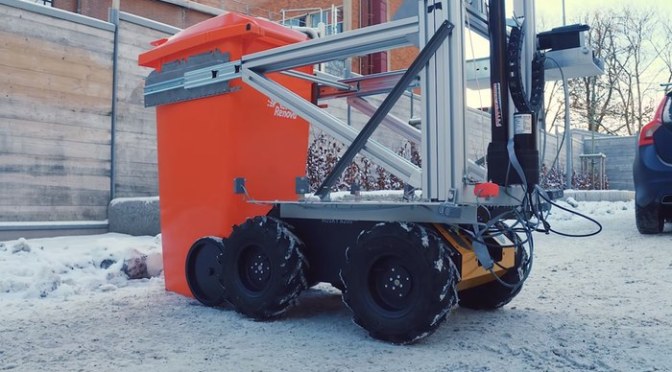
The ROAR project (Robot based Autonomous Refuse handling), is a system in it’s prototype phase where an autonomous robot works with a drone to pick up trash from the locations and collect it within the garbage truck.
The project which is funded by the Volvo group is being invented by more than 30 students from different universities. This robot can replace the cleaning / garbage men totally, once the project is fully functional. The project was announced by the Volvo group in September.
The robot is equipped with sensors and camera on top of the truck which navigates it and keeps it away from the obstacles. The process is being tested and it also has an inbuilt emergency break to avoid collision with any object or suppose a child is running. The robot will automatically stop in such a situation. It can also change it’s way if the sensor detects any obstacle on the way.
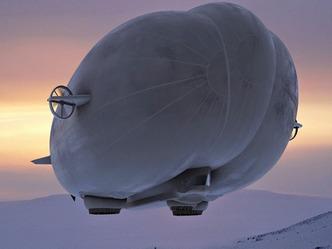
British company Hybrid Air Vehicle (HAV)’s largest aircraft Air-lander – 10 will take it’s flight next month.
This aircraft equivalent to the size of a football stadium can carry itself in the air till a fortnight. The flight will be operated from the Britain’s Bedfordshire.
Airbus A380 is the biggest passenger aircraft till date with a length of 72.7 meters, width of 79.8 meters and height of 24.1 meters.
The bottom base of this airbus is filled with helium which is the reason for it’s bigger size and it will help the aircraft in taking off and landing. The helium base will also help it to fly (take off and landing) like a helicopter.
48 passengers can fly on the aircraft along with the aircraft crew and can move around the cabins and have the outer view from this aircraft’s comfort zone.
On the test drive this aircraft will fly at the heights of 4000 feets and for 17.25 miles only.
HAV was earlier undertaking this project for the American army, but due to the cost cutting in the defense budgets, American army has withdrawn the contract. At the same time British Government and other dignitaries have shown interest and provide aid to this project. Plane’s bottom base is made up of special fabric which makes it strong and viable.
Air-lander can fly from London to Paris in 2.5 hours. It’s maximum speed is 92 mph and a capacity of 48 passengers. It is 92 meters long, 43.5 meters wide and has a height of 26 meters. It can fly for two weeks in air and has a capacity to carry 10 tons of weight. It is also environment friendly and produces less sound and air pollution, with less carbon emission than other planes and can even fly in extreme climate conditions. It also doesn’t require any runway to take flight.
It’s successful test drive will provide new hopes to the inventors.
Though these words were send to me in the name of Steve Jobs, but in absence of any firm source they can’t be attributed to Mr. Jobs.
Steve Jobs’ Last Words were “Oh..wow, Oh..wow, Oh..wow” as told by his sister and published at various media print and online.
These words convey great learning and inspiration.
By anyway, we should take a pause in life, look around, feel the love and cherish all what we do have, be grateful and do all the good what all we can to live a happy life filled with satisfaction and contentment.
Here goes these words:
“I reached the pinnacle of success in the business world. In others’ eyes, my life is an epitome of success.
However, aside from work, I have little joy. In the end, wealth is only a fact of life that I am accustomed to.
At this moment, lying on the sick bed and recalling my whole life, I realize that all the recognition and wealth that I took so much pride in, have paled and become meaningless in the face of impending death.
In the darkness, I look at the green lights from the life supporting machines and hear the humming mechanical sounds, I can feel the breath of god of death drawing closer…
Now I know, when we have accumulated sufficient wealth to last our lifetime, we should pursue other matters that are unrelated to wealth…
Should be something that is more important:
Perhaps relationships, perhaps art, perhaps a dream from younger days
Non-stop pursuing of wealth will only turn a person into a twisted being, just like me.
God gave us the senses to let us feel the love in everyone’s heart, not the illusions brought about by wealth.
The wealth I have won in my life I cannot bring with me. What I can bring is only the memories precipitated by love.
That’s the true riches which will follow you, accompany you, giving you strength and light to go on.
Love can travel a thousand miles. Life has no limit. Go where you want to go. Reach the height you want to reach. It is all in your heart and in your hands.
What is the most expensive bed in the world?
Sick bed…
You can employ someone to drive the car for you, make money for you but you cannot have someone to bear the sickness for you.
Material things lost can be found. But there is one thing that can never be found when it is lost – Life.
When a person goes into the operating room, he will realize that there is one book that he has yet to finish reading – Book of Healthy Life.
Whichever stage in life we are at right now, with time, we will face the day when the curtain comes down.
Treasure Love for your family, love for your spouse, love for your friends.
Treat yourself well. Cherish others.”






















 CA Shivani Gupta